Sandy Springs sits right above the city of Atlanta, where GA-400 crosses I-285, and it is the southern end of North Fulton. The name comes from an actual spring. It is still there on Sandy Springs Circle, on a small historic site next to the Williams-Payne House, an 1869 farmhouse that was moved there in the 1980s. The city itself is younger than the neighborhoods. It incorporated in 2005, long after most of its houses were built.
Those houses mostly came in the 1950s, 60s, and 70s, when the new highways made this a fast drive into town. That means a lot of brick ranches and split-levels on sloped, wooded lots. Hammond Hills, a swim and tennis neighborhood of more than a hundred homes, went up largely in the 1950s and 60s. River Shore Estates is another 1960s neighborhood with big lots and a lot of trees. North Springs, near GA-400 and the schools, is mostly ranches and traditional homes, many renovated over the years. Along Riverside Drive, the houses get bigger and more varied, with midcentury moderns, custom builds, and larger estates on winding, wooded roads down toward the Chattahoochee.
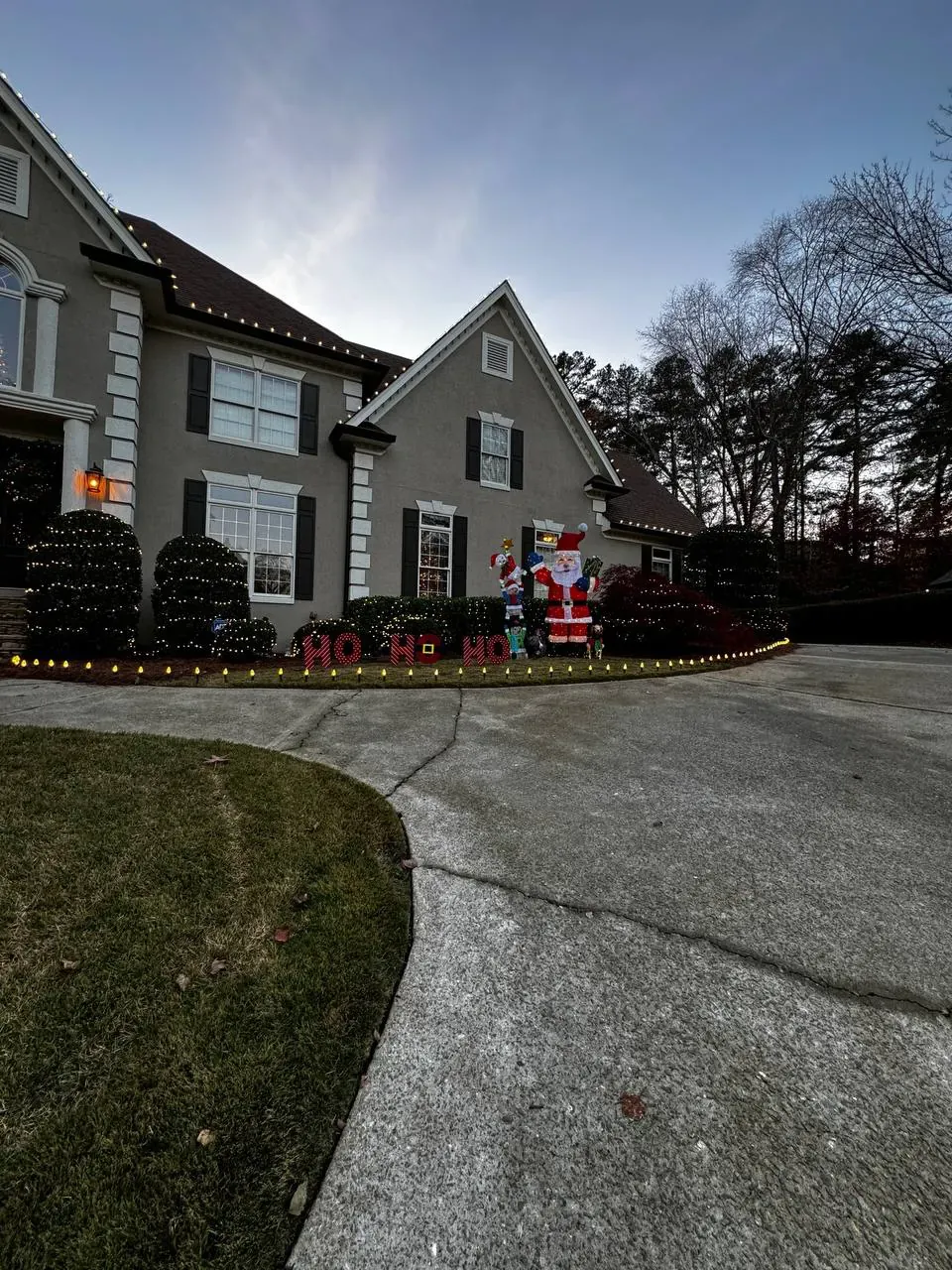
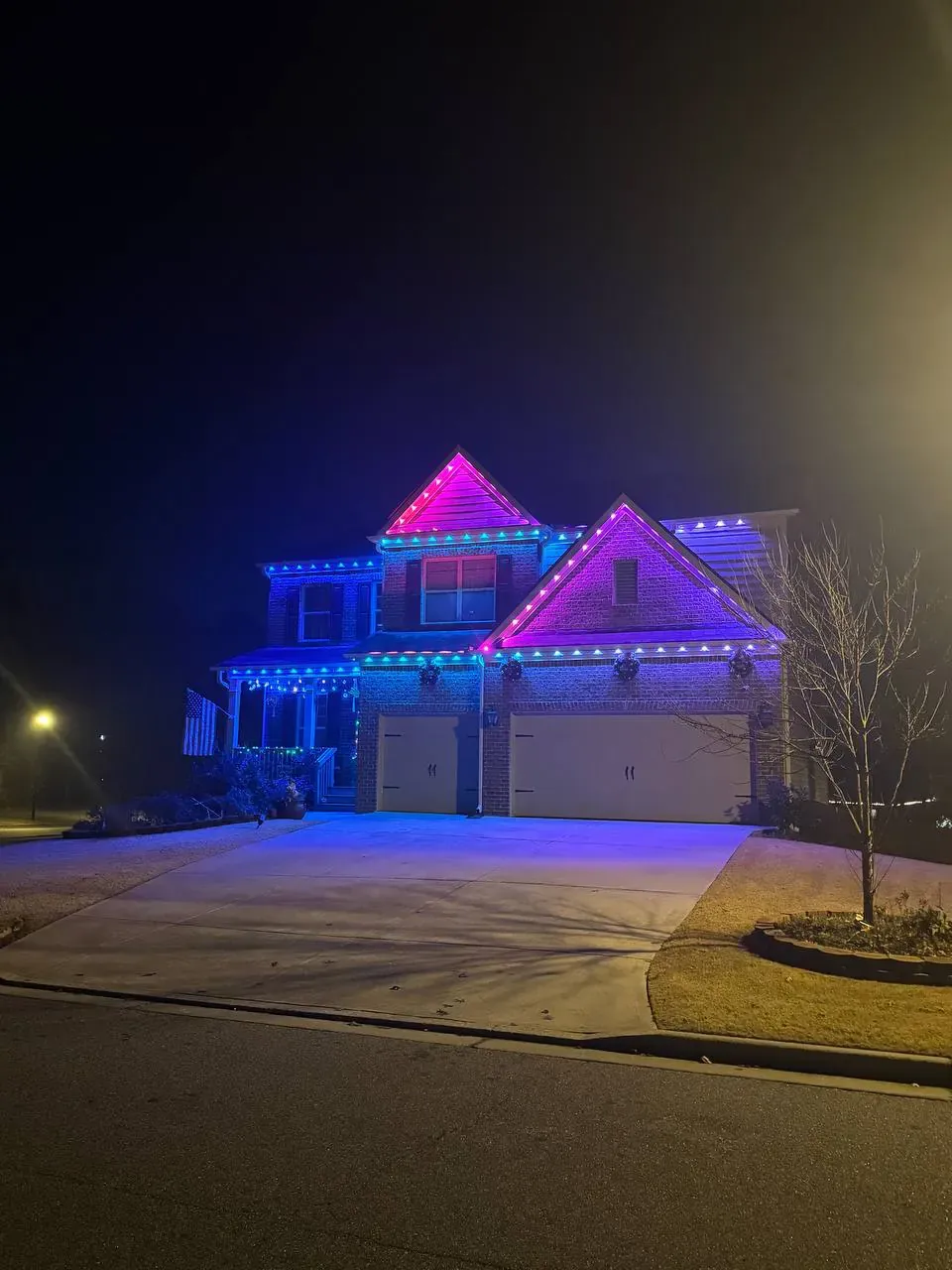
Huntcliff, further up the river, is its own world. The homes sit on large, rolling lots, and the neighborhood has a river preserve with a pool, tennis courts, horse stables, and trails through about 54 acres of forest and river frontage. Houses like these tend to sit back from the road, so we plan the lights around what you can actually see from the driveway.
December has a clear center now. City Springs, the civic district with City Hall and a performing arts center, hosts a holiday parade that ends with the lighting of a menorah and a Christmas tree, and the district stays lit through the season. Houses around the Roswell Road corridor see a lot of evening traffic that month, which is one more reason to get on the schedule early.